
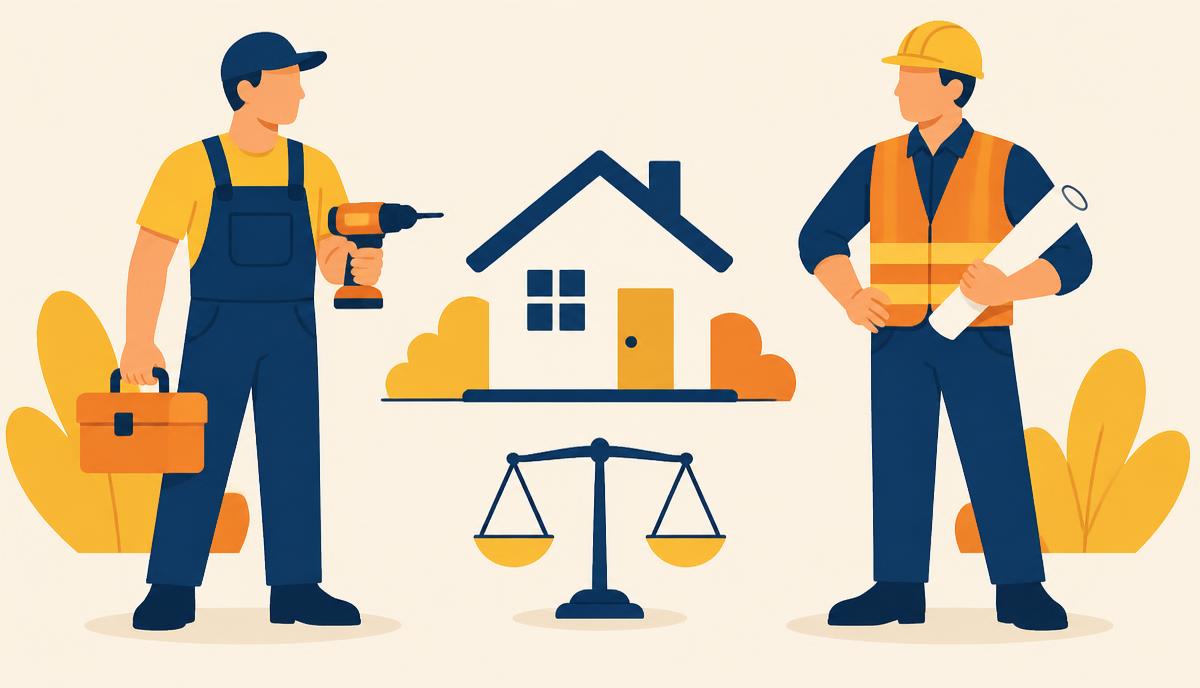
A door that won't close. A hole in the drywall. A bathroom that needs updating. You know what needs fixing, but who should you actually call? For many homeowners, the choice comes down to a handyman or a general contractor. Both can help with home improvement projects, but they're usually suited to different types of work. Here's how to choose the right professional without overcomplicating a simple repair.
When should you hire a handyman?
A handyman is often a good fit for smaller repairs, installations and routine maintenance projects that fall within their qualifications and local licensing rules. These are the kinds of projects that can sit on your to-do list for months because they don't seem big enough to call a construction company.
A handyman can often take care of several small repairs in a single appointment. Share the whole list before booking so the pro can allow enough time and bring the right materials.
- Repairing sticking interior doors
- Patching small drywall holes
- Installing shelves and curtain rods
- Replacing cabinet hardware
- Repairing window screens
- Installing weatherstripping
- Fixing minor fence or gate problems
- Assembling furniture
- Replacing damaged trim
- Handling several small repairs during one visit
When is a general contractor the better choice?
General contractors typically manage larger renovation and construction projects, particularly jobs involving multiple trades, scheduling, permits and inspections.
For example, replacing a bathroom mirror may be a straightforward handyman project. Completely remodeling the bathroom, moving plumbing and rebuilding the shower is a different level of work. Ask who will coordinate the trades, obtain required permits and handle inspections.
- A major kitchen or bathroom renovation
- A room addition
- Structural modifications
- A substantial home remodel
- Projects requiring several subcontractors
- Construction that requires significant permitting and inspections
When do you need a specialist?
Some jobs require a licensed specialist rather than a general handyman. Work involving electrical panels, gas lines, major plumbing changes, structural repairs and certain HVAC systems should be evaluated by an appropriately qualified professional.
Licensing and permit requirements vary by state and locality, and can depend on the type and value of the work. Match the job with someone legally qualified to perform it. Verify applicable credentials with your local licensing authority, and ask about insurance and permits before work begins.
Questions to ask before hiring a handymanHow can you tell if a project is too small for a contractor?
Think about the scope rather than the size of the problem. If you're fixing, adjusting, assembling, mounting or replacing an existing item, a handyman may be a good starting point—provided the work is within their qualifications.
If you're changing the structure of your home, coordinating multiple trades or building something substantial from scratch, a general contractor may be more appropriate. A small visible problem can also hide a larger issue, so describe any leaks, recurring cracks or other warning signs rather than assuming the repair is purely cosmetic.
When you're unsure, describe the project clearly and ask whether it falls within the professional's qualifications. A good pro will explain the limits of their work or recommend the right specialist.
Get an estimate before making calls
Finding the right professional is one challenge. Understanding what the project might cost is another. HandymanQuote™ makes it easier to start: choose your project, enter your ZIP code and provide your contact information to unlock an estimated price.
An estimate is a starting point, not a substitute for confirming the scope, materials and final price directly with the professional. Unlike traditional shared-lead marketplaces, your request isn't sent to multiple competing contractors. Where a participating local pro serves your territory, you can start the conversation with one contractor rather than fielding calls from several companies.
Prepare your home for a handyman visitThe takeaway
Not every home repair needs a general contractor, and not every project is appropriate for a handyman. Choose the professional whose experience and qualifications match the job. For smaller repairs and installations, starting with a handyman can make the process much simpler.
Get an instant handyman quoteKeep reading
How to Choose a Handyman Service Area That Actually Makes Money
More service area doesn't always mean more business. Focus on nearby jobs, repeat customers and travel costs before expanding your territory.
How to prepare your home for a handyman visit
Twenty minutes of prep can save an hour of billed time. Here is what to clear, gather and decide before the pro knocks on your door.
How to turn one handyman job into a repeat customer
Finding a new customer costs far more than keeping one. These simple habits turn a one-off repair into years of repeat work and referrals.